XPeng's IRON Walked Off a Humanoid Robot Production Line. Here's What That Took.
A bipedal robot assembled on a fixed line, then walking away under its own control, is a manufacturing claim before it is a robotics one. The manufacturing part is the harder half.

In this article 5 sections
Quick answer: XPeng switched on what it calls the world's first automated humanoid robot production line in Guangzhou on September 8, 2026, and its IRON robot walked off that line under its own control. Core process automation on the line runs above 80%. Mass production is targeted for the end of 2026, with an official launch and deliveries in 2027.
Every humanoid robot demo you have watched in the last three years was a hand-built unit. One frame, one wiring harness, a team of engineers who know that specific machine by serial number. The interesting thing XPeng did this month was not making a robot walk. It was making a robot that came off a line.
This piece is for hardware buyers, manufacturing engineers, and anyone tracking humanoids as a supply-chain question rather than a video. It covers what XPeng actually commissioned, why a bipedal robot is harder to build on a line than a car, what the 80% automation figure does and does not cover, and what the 2027 delivery date is worth. At Protocol Wire we care less about the walk and more about the fixturing behind it.
What Actually Happened in Guangzhou

On September 8, 2026, XPeng commissioned humanoid robot production lines at its Guangzhou facility. IRON came off the line fully assembled, walked away without human assistance or remote control, and was handed a staff badge by the company's CEO. The badge was theater. The walk was not.
XPeng describes the setup as the world's first automated production line for advanced humanoid robots, built by grafting automotive-grade quality systems onto precision robot assembly. That framing matters more than the superlative. XPeng has been building electric vehicles at volume for years, which means it already owns the boring apparatus — inbound part inspection, torque traceability, end-of-line test — that a robotics startup has to invent from scratch. The company laid out the same schedule in its Form 6-K filing with the U.S. Securities and Exchange Commission (SEC), which is the version I would trust over a launch video.
The claim being made is narrow and worth restating precisely. It is not that IRON is finished. It is that a general-purpose humanoid was manufactured in sequence on a fixed line and left it operating under its own control.
Compare that to how Tesla talks about Optimus, or how Figure talks about its own line: both companies show individual units performing tasks, rarely a sequence of units coming off a shared line one after another. XPeng chose to demonstrate the boring part — repeatability — instead of the flashy part, which tells you where the company thinks its actual advantage sits. Protocol Wire reads that choice as a manufacturing company applying its existing playbook to a new product category, not a robotics lab discovering assembly for the first time.
Why a Humanoid Robot Production Line Is Harder Than a Car Line

A car is a rigid box with wheels and roughly 30 joint-equivalent moving assemblies. A general-purpose humanoid carries more than 60 actuated joints, each one a motor, a gearbox, an encoder, and a thermal problem, packed into a frame that has to hold itself upright. Every tolerance that a car body can absorb, a walking robot cannot.
The failure mode is different too. A misaligned door panel is a warranty complaint. A misaligned hip actuator is a robot that drifts left over 200 steps and eventually falls into a shelf. That is why end-of-line calibration, not assembly, is the constraint on a humanoid robot production line.
Scale context helps here. The International Federation of Robotics (IFR) World Robotics 2025 report counted 542,000 industrial robots installed globally in 2024, more than double the figure from a decade earlier, with 4.66 million units in operational use. Nearly all of those are bolted to a floor and never move their base. The industry has 50 years of practice building arms and almost none building legs.
The tradeoff nobody advertises: automating a humanoid line raises fixed cost per station dramatically, because each station needs force-controlled tooling instead of a simple pneumatic clamp. That cost only amortizes if annual volume clears a few thousand units. Below that, hand assembly is genuinely cheaper.
What Does XPeng's 80% Automation Number Actually Cover?
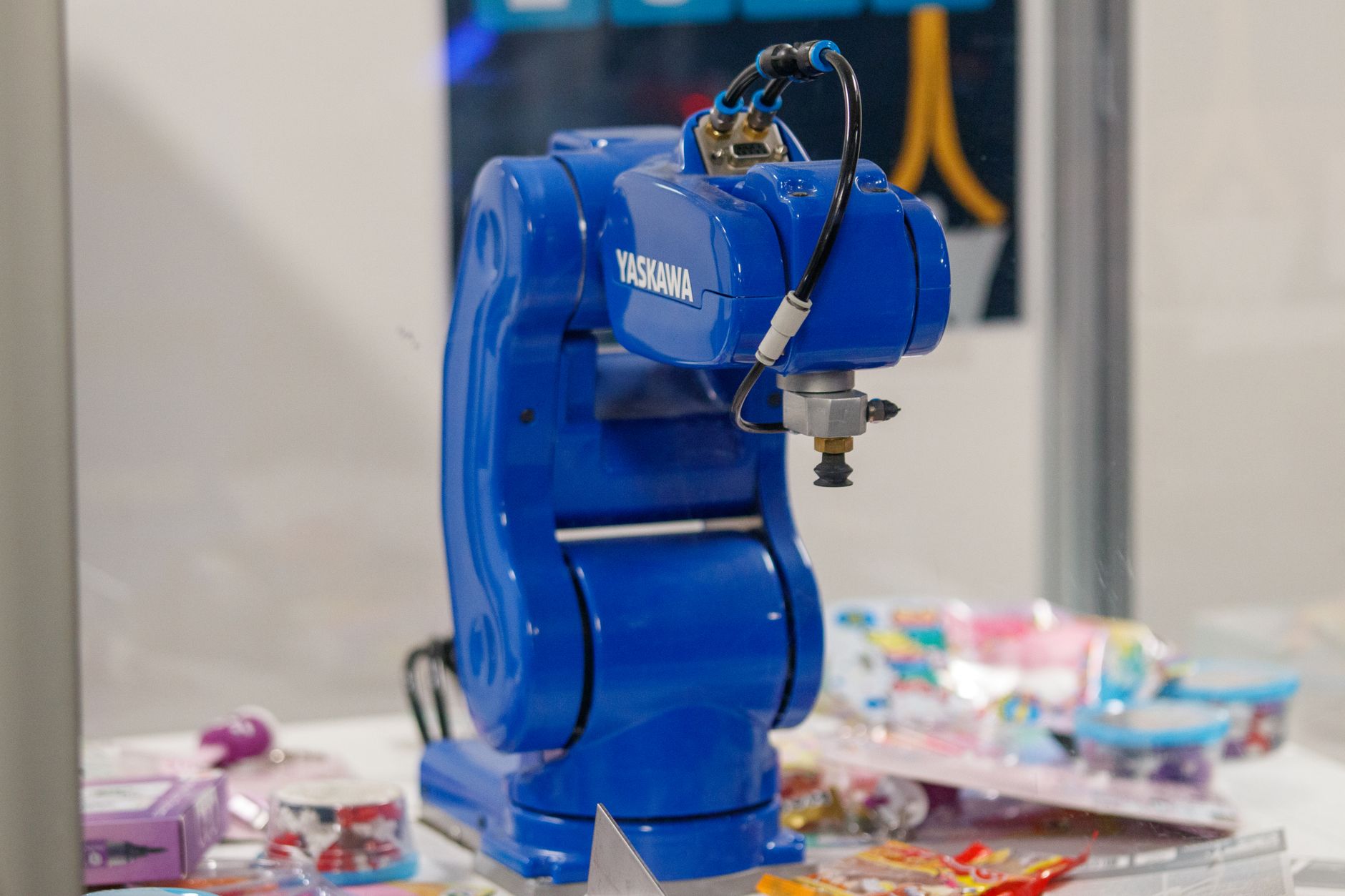
XPeng puts core process automation on the line above 80%. Read that phrase carefully, because "core process" is doing real work in the sentence. It typically covers the repeatable, high-volume steps — subassembly press-fits, fastener driving, adhesive dispensing, board-level placement — and typically excludes final harness routing, skin fitment, and the calibration pass.
That last 20% tends to behave the same way on every new line. It is where the people are, it is where the cycle time variance lives, and it is the number that decides whether a year-end mass production target is real. An 80% automated line with a four-hour manual calibration step at the end is still gated by the calibration step.
None of this is a knock on the achievement. It is the normal shape of a new line. IFR's own Top 5 Global Robotics Trends for 2026 flags exactly this pattern — physical AI and humanoid programs moving from lab builds into manufacturing engineering problems, where the remaining manual steps set the ceiling on output. For a grounded comparison of how hardware claims survive contact with volume production, our teardown of the iPhone Ultra's foldable hinge covers the same gap between a demo unit and a line unit.
A published automation percentage usually describes stations, not time. An 80% figure can mean 80% of physical stations run without a human present, while the manual 20% still consumes 40% or more of total cycle time, because calibration and inspection are slow relative to a press-fit or a fastener drive. Until XPeng publishes a station-by-station breakdown, the honest read is that the headline number describes footprint, not throughput.
Protocol Wire's Read on the 2027 Delivery Date

XPeng has reaffirmed mass production by the end of 2026, followed by an official launch and deliveries in China and overseas during 2027. As of September 2026, that leaves roughly three months to go from a commissioned line to sustained output. Three months is tight but not absurd for a company that already runs vehicle plants.
The number I would watch is not units shipped. It is first-pass yield on the calibration step, because that is what separates a line that runs and a line that reworks. XPeng has not published it, and I would not expect them to.
A useful benchmark comes from the automotive side of XPeng's own business. A modern EV body shop typically runs above 95% first-pass yield on welds and fastening before it is considered production-ready; anything meaningfully below that gets pulled back into engineering. If IRON's calibration yield sits closer to 60% or 70% right now, which would not be unusual for a first-generation humanoid line, "mass production" at year-end means a lot of units get flagged, reworked, and delayed rather than shipped on schedule. A rate needs its sample size, as Backblaze's Q2 2026 drive data shows.
There is a real counterargument here worth stating plainly. A production line built ahead of proven demand is a bet, and humanoids have no established commercial buyer outside a handful of logistics and automotive pilots. XPeng may end up with a line that can build 10,000 robots a year and orders for 800. The compute side of this story has the same shape, which our roundup of the chips powering this year's AI boom gets into — capacity commitments landing well before the demand curve confirms them.
What to Take From This
The headline is a robot walking. The story is a manufacturer treating humanoids as a production engineering problem and committing capital to fixtures, test stations, and traceability before anyone has proven the market. That is a more serious signal than any demo reel, and it is why Protocol Wire tracks humanoid robotics as a hardware supply story rather than an AI one.
If you are evaluating humanoids for a real deployment, ask vendors two questions: what percentage of your line is manual, and what is your first-pass calibration yield. The answers will tell you more about delivery risk in 2027 than any spec sheet. A fixture built for a humanoid line does not repurpose easily into an automotive fixture, so if humanoid demand disappoints, the downside case is not idle capacity, it is capital that is genuinely stranded. Protocol Wire covers platform shifts, chips, and product launches for the engineers and buyers who have to live with them after the announcement.