Factory Tripled Its Valuation in Five Months. Here's What Its AI Droids Actually Do.
A $200 million round pushed Factory to a $5 billion valuation this month, up from $1.5 billion in April. The interesting part isn't the number — it's what changed in the product between those two rounds.

In this article 4 sections
Quick answer: Factory, which builds AI coding agents it calls "Droids" for enterprise engineering teams, raised $200 million on September 15 at a $5 billion valuation — more than triple the $1.5 billion it was worth after its April round. Backers include Blackstone, Khosla Ventures, and Sequoia Capital, and the company's total funding now tops $400 million. What actually changed between those two rounds is a more interesting story than the number itself: a router that cuts token spend by more than 60%, deployment options for regulated and air-gapped environments, and a growing customer list that includes Nvidia, Adobe, and Royal Bank of Canada.
Every few months another AI coding startup posts a valuation number that's supposed to make you sit up. Most of the time a big check doesn't tell you anything about whether the tool actually works in a repo with fifteen years of accumulated technical debt and a linter nobody agrees on. Factory's round stands out anyway, not because of the $5 billion figure but because of the five months it took to get there — from a $150 million Series C at $1.5 billion in April to this. That's not the kind of growth curve that happens on vibes alone. Something shipped. Protocol Wire covers AI and startup funding with an eye on what actually shipped, and that is the lens here.
From $1.5 Billion to $5 Billion in Five Months

Founders Matan Grinberg and Eno Reyes started Factory in 2023 on a mission statement that read as ambitious bordering on absurd at the time: bring autonomy to software engineering, so software builds and improves itself. Three years and four funding rounds later, that mission statement is a lot less absurd, mostly because enterprise engineering orgs at companies like Nvidia and Adobe are apparently paying to test it against real production code, not a curated demo repo.
The $200 million round Factory announced on September 15 came from Blackstone, Khosla Ventures, and Sequoia Capital, and it's the company's fourth raise, bringing total funding past $400 million. What's worth noticing isn't just that the valuation tripled — it's that it tripled in five months, not the twelve-to-eighteen most late-stage rounds take to double. That pace only makes sense if usage numbers, not just investor sentiment, moved fast enough to justify it. Revenue and usage figures for private companies are notoriously squishy to verify from the outside, so any specific multiple deserves some skepticism. But the product shipped between rounds is real, checkable, and worth walking through on its own.
What a Droid Actually Does in a Real Repo
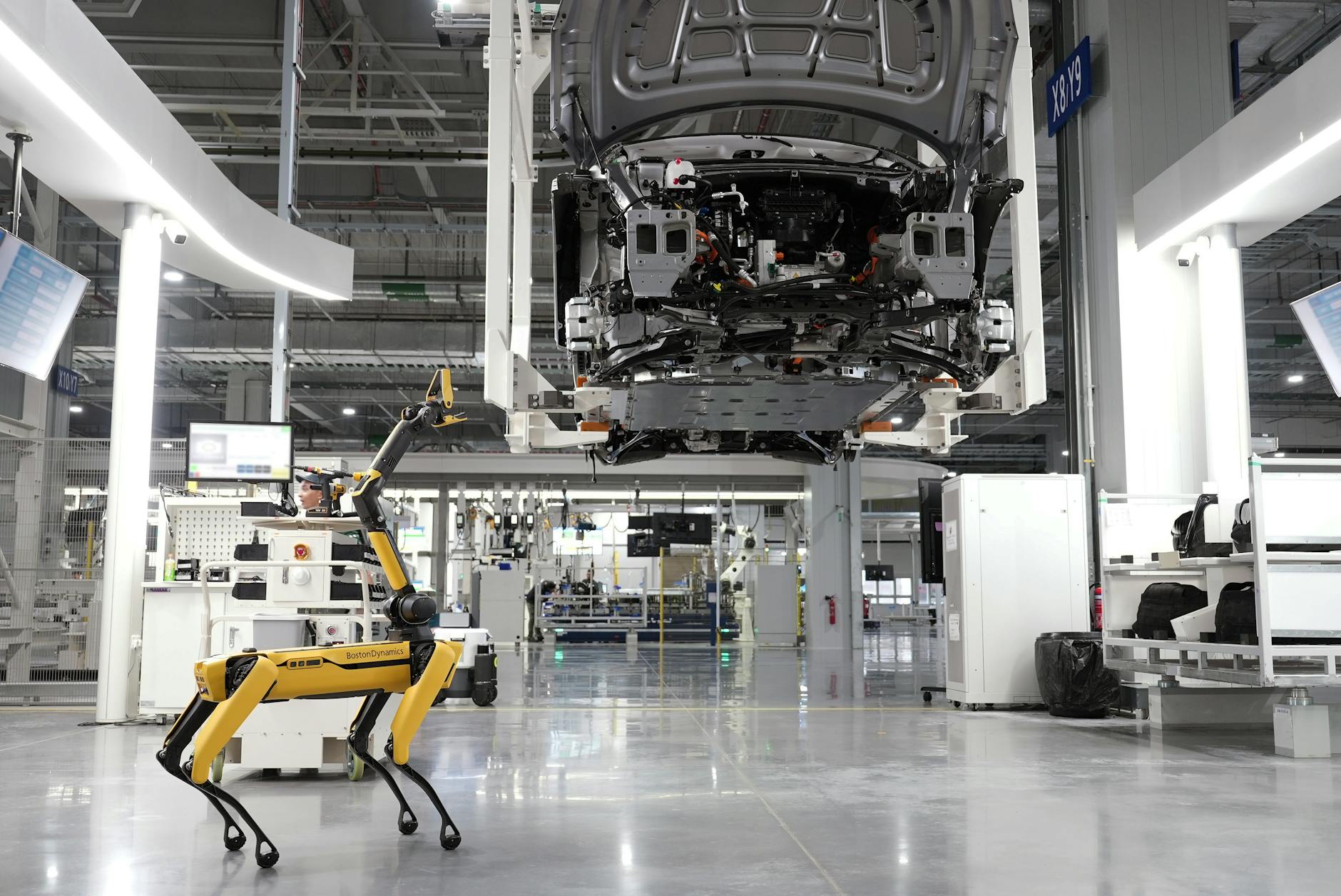
"Droid" is Factory's branding for its coding agents, and it's a cuter name than the category usually gets, but the mechanics are what matter. A Droid is scoped to a task — fix this bug, migrate this service, write tests against this module — and it works inside the company's actual environment rather than a sandboxed clone, which is the detail that separates an enterprise coding agent from a consumer one. That matters more than it sounds like it should: a lot of AI coding tools demo beautifully against a clean greenfield repo and then fall apart the moment they hit a real monorepo with inconsistent formatting, half-documented internal libraries, and a CI pipeline built by three different people over six years. Factory's pitch is specifically that it's built for the second kind of repo, not the first.
The company's customer list backs that framing up more than most vendor pages do. Palo Alto Networks and Royal Bank of Canada aren't running toy pilots — those are organizations with security and compliance requirements that rule out a lot of AI tooling by default, and both are named as customers alongside Nvidia, Blackstone, and Adobe. T-Mobile shows up too. That's not a proof point every AI coding startup can point to, and it's the kind of customer list that's harder to fake than a benchmark score.
Factory Router, the Customer List, and the Real Test Ahead

The most concrete thing Factory shipped since April is Factory Router, which automatically assigns the right underlying model to each task rather than routing everything through one general-purpose model regardless of fit. The company says this cuts token spend by more than 60% — a specific, checkable claim, and one that matters a lot more to an enterprise buyer than raw capability numbers do, since token cost is the line item that actually shows up on next quarter's cloud bill. Factory also shipped deployment options for regulated and air-gapped environments, which is table stakes for selling into banks and defense-adjacent customers, and a feature called Agent Effectiveness, built to answer the question every CFO eventually asks about AI tooling spend: is this actually worth it, measured against something more rigorous than a team's vibes.
That last feature is arguably the most telling one in the release. A company confident that its agents are delivering real value builds a tool to prove exactly how much — the same instinct that's driving the broader shift toward agent oversight and accountability showing up elsewhere in AI infrastructure spending right now, including in the seed-stage startups raising money specifically to vet what enterprise agents are doing. It's a different problem than Factory solves, but it's the same underlying market signal: buyers want receipts, not just capability claims.
None of this settles the bigger question hanging over the entire AI coding category, which is whether any single company captures durable value here or whether the whole space stays this competitive indefinitely, with valuations tripling and cratering on a few months' notice depending on who shipped what last. Factory isn't alone in chasing this market — reporting on the round notes it's part of a broader wave of AI coding startups raising at steep multiples this year, in a market where a $48 billion valuation for a similarly-positioned competitor is now part of the same conversation. What actually decides who wins probably isn't the next funding round. It's whether Agent Effectiveness scores hold up a year from now, once the free trials expire and finance starts asking the same ROI questions Factory built a feature to answer for everyone else. And infrastructure spend for agents like these isn't free either — the real, ongoing cost of running AI workloads at this scale is exactly the bill Factory Router is trying to shrink, which tells you where the next competitive fight in this category is actually headed.
Conclusion
A tripled valuation in five months is a headline. Factory Router cutting token spend by more than 60%, deployment for regulated environments, and a named customer list that includes banks and defense-adjacent companies are the actual evidence. An AI coding agent is better judged by whether it survives contact with a real, messy, over-decade-old codebase than by what a term sheet says about it — and on that specific measure, Factory has shipped more receipts than most of the category managed this year. Protocol Wire's approach to funding news is the same each time: look at what shipped, not just what was raised.