Omni-Modal Model Pricing: Audio Got 98% Cheaper to Process. That Changes What You Build, Not What You Save.
Qwen3.8-Omni-Flash landed with a million-token context and audio pricing that reads like a typo. The interesting part isn't the discount on what you already run.

In this article 5 sections
Quick answer: Omni-modal model pricing just fell far enough to change project scoping. Qwen3.8-Omni-Flash, released September 18, 2026, takes text, images, audio, and video in one request across a one-million-token context at $0.15 per million input tokens. Audio input runs roughly 98% cheaper per hour than the prior generation. That unlocks continuous workloads, not savings on existing ones.
Price drops in this space usually get covered as a discount story. Somebody posts a chart, everyone notes their bill is going down, and nothing about the product changes. That framing misses what actually happens when a cost falls by two orders of magnitude.
This explainer is for engineers and technical leads deciding what to build next quarter. It covers what shipped, what the pricing actually is, which workloads cross from impossible to routine at this cost, and where the real constraints moved to instead. Protocol Wire tracks model releases as engineering budget decisions, not leaderboard results.
What Does Qwen3.8-Omni-Flash Actually Ship?
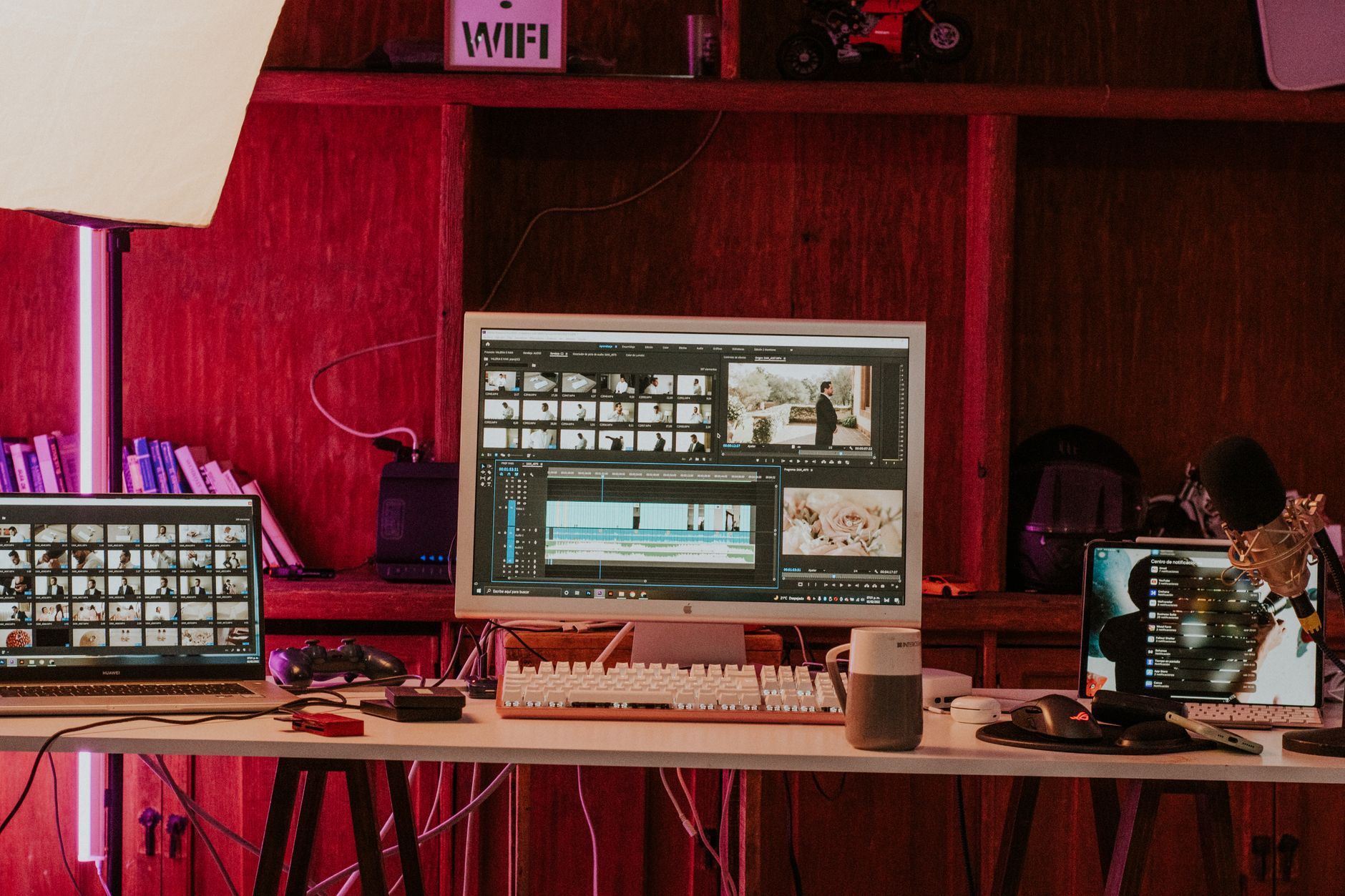
Alibaba's Qwen team released Qwen3.8-Omni-Flash on September 18, 2026. It accepts text, images, audio, and video in a single request, holds a one-million-token context window, and is built around agentic audio-video understanding with native tool calling.
The omni-modal part is the structural change, not the context length. Most production pipelines today route audio to a transcription model, video to a frame sampler, and text to a language model, then stitch the outputs together. Every one of those handoffs is a place where timing information and speaker context get lost.
A single model that ingests the raw streams keeps that alignment. TechNode's report on the release covers the capability set in more detail. If you want the wider September picture, our roundup of the model releases that actually mattered this September puts it next to everything else that shipped this month.
Alibaba positions the Flash tier as the volume option, sitting under a larger Qwen3.8-Omni model the company has not priced publicly yet. That naming pattern — a flagship announced alongside a cheaper Flash variant — mirrors what Google did with Gemini 2.5 and what OpenAI did with its GPT-5 family, and it is becoming the standard way frontier labs ship a capability tier and a cost tier at the same time instead of one model that tries to do both.
Native tool calling on top of that stream handling is what makes the "agentic" label defensible here rather than decorative. A model that can watch a screen recording and then call a function based on what it saw is doing something a stitched pipeline cannot do cleanly. The interface conventions for that are still settling across vendors, which our coverage of what changed when OpenAI opened its Agents API gets into.
Benchmark numbers Alibaba published alongside the release put Qwen3.8-Omni-Flash close to Gemini 2.5 Flash on audio understanding tasks and slightly behind on complex video reasoning, based on the vendor's own OmniBench-style evaluation. Take vendor benchmarks with the usual grain of salt, but the gap being small rather than a full generation is the more interesting signal — it means the model is priced like a discount option while scoring like a mid-tier one.
Omni-Modal Model Pricing, Line by Line

Here is the published international pricing, which is the number to plan against unless you are operating inside China.
| Token type | Price per million | What it applies to |
|---|---|---|
| Input (standard) | $0.15 | New context on every request |
| Input (cache hit) | $0.016 | Repeated prefix across requests |
| Output | $0.47 | Generated tokens |
The cache-hit line deserves more attention than it gets. At roughly a tenth of standard input pricing, any workload with a stable prefix — a system prompt, a document, a long call transcript you keep querying — changes shape economically. Design for cache hits and your effective input cost is closer to $0.02 than $0.15.
On the modality side, Alibaba reports audio input costs over 98% lower per hour and audio-visual input over 93% lower per hour than the predecessor Qwen3.5-Omni-Plus. Those are the headline numbers, and they are per hour of media rather than per token, which is the right unit for anyone budgeting a media pipeline.
Read the fine print before you model it: domestic Bailian pricing in China is quoted separately at roughly 0.8 yuan per million for multimodal input. If your finance model was built on a Chinese price quote and your workload runs internationally, you are off by a meaningful multiple.
Run the math on a concrete pipeline. A support line handling 5,000 calls a day at an average 8 minutes each is roughly 667 hours of audio daily. At the prior generation's rate that workload ran deep into five figures a month; at Qwen3.8-Omni-Flash's published per-hour audio pricing, the same volume lands closer to four figures. That is the difference between a project a director has to fight for budget on and one an engineer approves on their own signing authority.
Which Workloads This Actually Unlocks
The useful test is not "does this save money on what I run today." It is "what did I scope out of a project because the media processing bill killed it." Three categories cross the line at this price.
- Continuous instead of sampled. Support call review that used to cover a 2% random sample can cover 100% of calls. The quality gain comes from coverage, not from the model.
- Retrospective instead of prospective. Reprocessing a two-year archive of recordings becomes a weekend job rather than a budget request.
- Ambient instead of triggered. Workloads that only made sense when a user explicitly asked can now run in the background, because the marginal cost of looking is near zero.
Every one of those was technically possible at last year's prices and commercially absurd. That is the specific way a two-order-of-magnitude cost drop works: it does not make existing features better, it moves a category of work from the "someday" list to the current sprint.
I would apply one filter before getting excited. If your bottleneck was accuracy rather than cost, cheaper inference changes nothing for you, and a Flash-tier model is usually the weaker option on hard reasoning. Run the eval on your own data before you rewrite the roadmap around the price.
There is a fourth category worth naming separately: multilingual support workflows. A call center handling Spanish, Mandarin, and English today usually runs three separate transcription-and-translation pipelines stitched together, each with its own error rate. An omni-modal model handling all three natively at this price point removes two of those seams, which is a quality gain that happens to also be cheaper, not the other way around.
Where the Constraint Moves Next

When inference gets cheap, the constraint does not disappear. It relocates, usually somewhere with a less obvious price tag.
Storage and egress are the first place it lands. Processing every call is cheap; retaining the audio, the transcript, the embeddings, and the derived artifacts for a compliance window is not, and that bill grows linearly with the coverage you just expanded. Our reporting on what running AI workloads actually costs once the invoice arrives works through how those line items stack up in practice.
Latency is the second. A one-million-token context is a capability, not a free action, and filling it has a real time cost on every request. Teams that treat context length as unlimited discover their p99 response time moved before their bill did.
The third is the one that actually bites: data governance. Processing 100% of customer calls instead of 2% means you now hold a great deal more sensitive material, under retention rules that were written for the sampled version. Cheap inference has a way of creating expensive legal review. The broader cost curve here is well documented — Stanford University's Human-Centered AI Institute 2026 AI Index Report tracks inference pricing falling by more than two orders of magnitude over roughly two years, so this pattern is going to keep repeating.
How Fast Does This Kind of Price Drop Usually Repeat?
Roughly every 12 to 18 months, based on the pattern since 2023. A model class that looks like a breakthrough discount today is priced like a commodity within two release cycles, so the workload you scope around today's price should still make sense if the next drop lands on schedule and squeezes your margin further.
We have seen this exact sequence before with vision-language models: a novelty price in year one, a mainstream price by year two, and a race-to-the-bottom by year three once three or four vendors match the capability. Budget for that trajectory rather than for a static number, because the vendor that is cheapest today is rarely the one with the best long-term pricing roadmap.
What to Do With This
Do not migrate for the discount. Go find the project you scoped down or killed in the last eighteen months because media processing costs made it unworkable, and re-run the math at $0.15 per million input and $0.016 on cache hits. If it now clears, that is the real product of this release.
Then price the storage, latency, and retention consequences of the expanded coverage before you commit, because that is where the money quietly went. Protocol Wire covers platform shifts, chips, and product launches for the engineers and buyers who have to live with them after the announcement.